
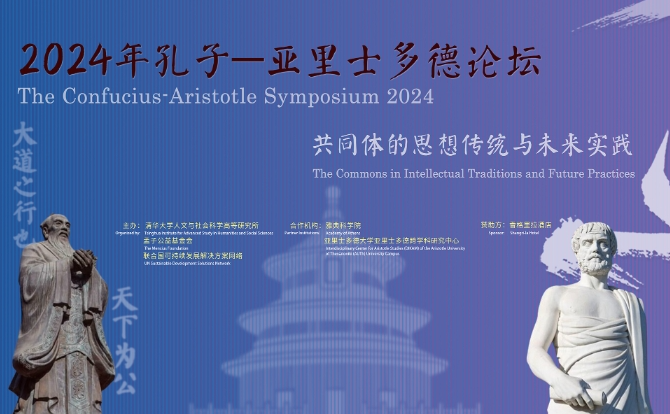
The third Confucius-Aristotle Symposium is set to take place in Qufu and Beijing from July 8 to 12, 2024. This event, organized by the UN Sustainable Development Solutions Network (SDSN) and spearheaded by President Jeffrey Sachs and Senior Manager Philo Wang, is a collaboration between prestigious institutions from China and Greece.
The symposium is divided into two sections. The first section, “Ancient Wisdom for Modern Challenges,” will be held from July 8 to 10 in Qufu, hosted by the Nishan World Center for Confucian Studies and the China Confucius Foundation. The second section, “Commons in Intellectual Traditions and Future Practices,” will take place from July 11 to 12 in Beijing, hosted by the Tsinghua Institute for Advanced Study in Humanities and Social Sciences and The Mencius Foundation. Greek partner institutions include the Academy of Athens and the Interdisciplinary Center for Aristotle Studies (DKAM) at Aristotle University of Thessaloniki. The Beijing meeting is sponsored by Shangri-La Beijing.
Approximately 150 renowned scholars and leaders from over 10 countries will convene to discuss the contemporary relevance of Confucianism and Aristotelianism, comparative philosophy, global ethics, and the theory and practice of “the commons.” Discussions will cover a range of topics, including cultural dialogue, classical studies, political philosophy, ecology, religion, artificial intelligence, and public policy.
The symposium aims to foster dialogue among leaders and scholars from various cultural and academic backgrounds. Participants will explore the intersections of ancient wisdom and its potential to address modern challenges such as environmental crises, political conflicts, and the governance of new technologies. The ultimate goal is to identify common heritage and shared values to promote peace and cooperation in the 21st century.
The first two meetings, held in Greece in 2022 and 2023, celebrated Aristotle and Greek philosophy. This year’s event in China will honor Confucius and the global impact of Ancient Chinese civilization. The symposium will examine the common approaches of Aristotle, Confucius, and other traditions.